“I must have flowers, always, and always.” Claude Monet
Saturday, 23 May 2020
Monday, 18 May 2020
A big ball of fire...
This cactus was sown by my daughter Lilli around 35 years ago.
Chinocactus grusonii also known as Golden Barrel cactus or mother-in-law's cushion, is a well-known species of cactus, and is endemic to east-central Mexico.
It is rare and endangered in the wild, where it is found near Mesa de León in the state of Querétaro, and in the state of Hidalgo.The population was critically reduced in the 1990s, by the creation of the Zimapán Dam and reservoir in Hidalgo.The cactus grows in volcanic rock on slopes, at altitudes around 1,400 metres.
Flowers of the Golden Barrel cactus, it has flowered spectacularly.
Photos/text Ts
Cheer up!
Ixora coccinea
Ixora is native to tropical Asia. Mostly shrubs and small trees that are part of the tropical forest. Ixora is not only used for ornamental purposes but also for its medicinal qualities.
Ixora is widespread in Southeast Asian gardens and used to treat various ailments like rheumatism and wounds. Ixora coccinea, a dense shrub with scarlet flowers, is native to India where it is widely used in traditional medicine as well. The leaves possess antiseptic properties and the roots can be used to treat diarrhea and fever.
Photos/text Ts
Tuesday, 12 May 2020
Tuesday, 5 May 2020
Monday, 4 May 2020
The potting shed.
It was fun to draw and paint an interpretation of the potting shed.
A garden is a commitment to the plants, to water, to weed, to prune and finally to enjoy every task.
In 307/306 BCE the Athenian philosopher Epicurus bought a house with a garden just outside Athens along the road from the Dipylon gate to the Academy.
Other great founders of philosophical schools had chosen public areas for their teaching: Plato established his school near the Academy. Isocrates and Aristotle taught in the Lyceum. Zeno often met his students in the Stoa Poecile. In contrast, Epicurus’ hedonistic and materialistic philosophy flourished and grew amidst the privately owned groves of his Garden. The Garden itself – apart from the city, a private space, and pleasurable –
Sunday, 3 May 2020
Old Rose, Irene Watts;
I love this rose.
China / Bengale.
Salmon-pink to light pink. Mild to strong, sweet fragrance. up to 50 petals. Average diameter 4". Large, very full (41+ petals) bloom form. Blooms in flushes throughout the season.
Short, well-branched. Small foliage.
Height (45 to 80 cm). Width (60 cm). Shade tolerant. -. Can be grown in the ground or in a container
Here in the subtropics winter smells of roses and the hot sun becomes powdered sunshine. Ts
Photo/Text Ts
Tiny pink Rose
This tiny beauty with a wonderful fragrance grows on the fence between my lovely neighbours, Claire and Mary. When the climbing shrub is in flower I pick some.
Cecile Brunner is a climbing rose with bushy, vigorous growth.
This tall growing rose needs support and is perfect for covering a strong metal frame, pergola or arbour.
Paul Laurence Dunbar - 1872-1900
Wonderful Penta.
(Pentas lanceolata) The plant may reach 1.5 m, but I do not let it grow such hight. I prune it back. The flowers are generally pink, red or white, but new cultivars have introduced tones of purple and lavender and mixed blooms such as pink with red centres. Mine do hybridize resulting in nice colours.
This old-fashioned plant is a favourite in my garden. The nectar-rich flowers are very attractive to bees and butterflies, so you will have the added bonus of enjoying watching these visitors to your garden. The flowers are also good for cutting, lasting a week or more in a vase.
Pentas flower almost year-round, and thrive in full sun or part shade. Pruning is a necessity to keep them blooming.
Flowers leave some of their fragrance in the hand that bestows them.
Chines proverb.
Photo/Text Ts
Photo/Text Ts
Saturday, 2 May 2020
Wonderful Milkweed flowers;
The milkweed flower (Asclepias syriaca) and its cousin butterfly weed (Asclepias tuberosa) are an essential part of a butterfly garden. Providing nectar for butterflies and hummingbirds. The Milkweed plant supplies larvae of the Monarch with food and shelter, providing caterpillars food and a resting place before they leave the caterpillar stage and become butterflies.
As the plants can be toxic; consumption of the plant protects caterpillars from predators. Historically, the milkweed plant was valuable when grown for its medicinal properties. Seeds are contained in an attractive pod that bursts and sends seeds drifting through the air, borne by the wind.
Photo/Text Ts
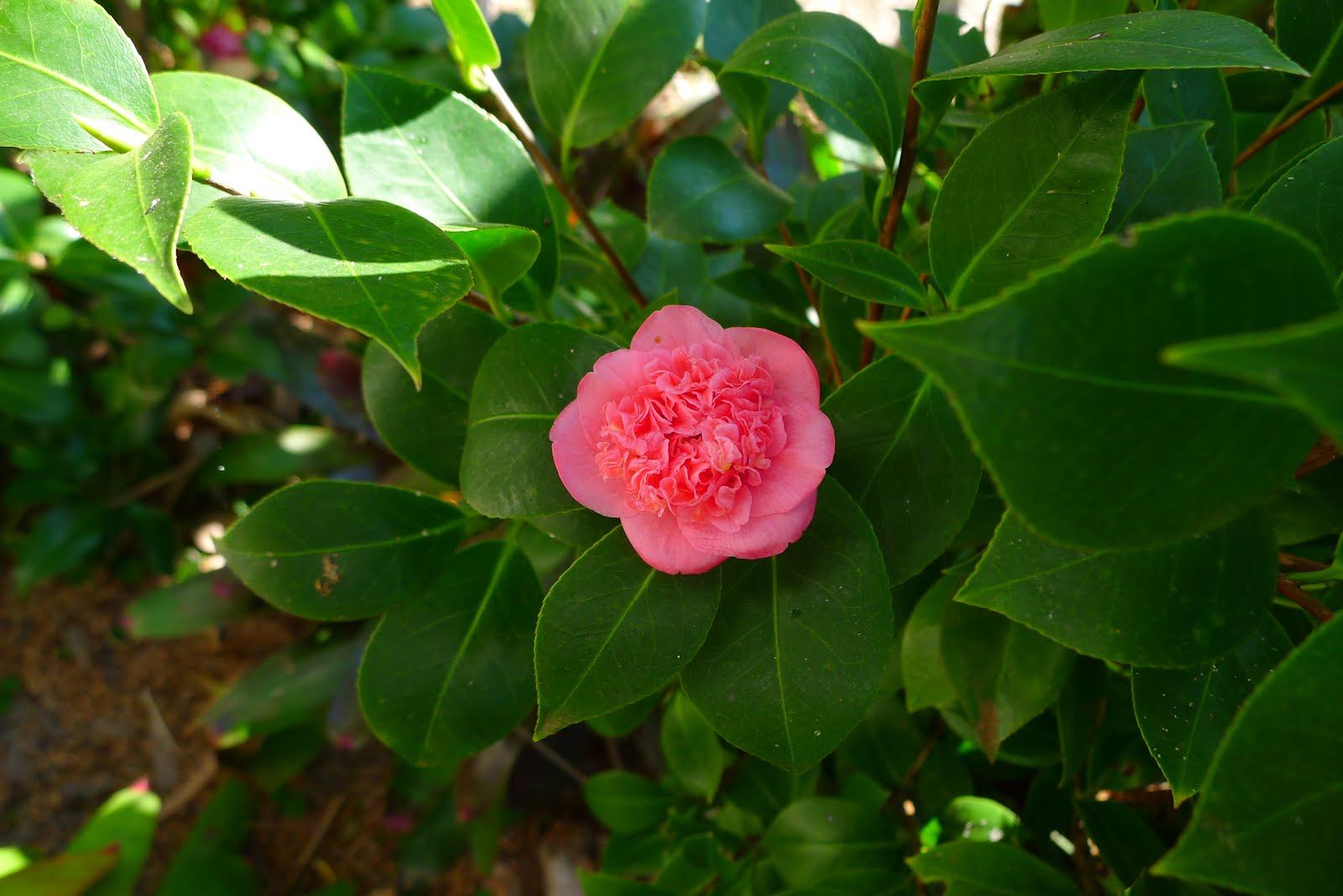
Camellia Sasanqua;
Camellia sasanqua, Setsugekka;
A delight when autumn arrives in my garden. It is one of the earliest bloomers. Its silvery-white, papery blossoms are delightful and beloved by bees and other nectar and pollen lovers.
Drought and disease resistant. Can grow to a fairly big tree.
“Her delight in the smallest things was like that of a child. There were days when she ran in the garden, like a child of ten, after a butterfly or a dragon-fly. This courtesan who had cost more money in bouquets than would have kept a whole family in comfort would sometimes sit on the grass for an hour, examining the simple flower whose name she bore.”
― Alexandre Dumas-fils, La Dame aux Camélias
Book of Flowers Photos/Text T.S.
Sunday, 9 June 2019
Flowers from the Outback.
While tanking fuel, Lilli collected a few wildflowers. The field was white with these strawflowers.

The Outback is the vast, remote interior of Australia. "The Outback" is more remote than those areas named "the bush", which include any location outside the main urban areas.
Culturally, the Outback is deeply ingrained in Australian heritage, history and folklore.
Book of flowers/Photos Ts
Wednesday, 5 June 2019
Salvia Peru blue.
One of the heavenly blue Salvia.
Salvia Macrophilla Peru Blue. Growing in my subtropical garden.
Perennial.
This highly individual plant originated from seed collected in Peru by J.Mark Porter for RSA Botanic Garden.
Very attractive gentian-blue flowers, with a swept-back lower lip.
It reproduces true from own saved seed. Grows also from underground rhizomes.
“A garden to walk in and immensity to dream in--what more could he ask? A few flowers at his feet and above him the stars.”
― Victor Hugo, Les Misérables
Photos mygarden Ts
Saturday, 3 December 2016
Canna;
Intriguing Canna;
Canna has an interesting family history...
Kingdom Plantae
Division Magnoliophyta
Class Liliopsida
Order Zingiberales
Family Cannaceae
Genus Canna
The canna plants are large tropical and subtropical perennial herbs. Canna rhizomes are edible and rich in starch and were once a staple food crop in Peru and Ecuador. Cannas may also fall victim to canna rust, a fungus resulting in orange spots on the plant's leaves.
Canna is grown for human consumption in the Andes and also in Vietnam and southern China, where the starch is used to make cellophane noodles.
Cannas are Propagated by seed, or by rhizomes.
Canna seeds need to be scarified and soaked in water prior to planting.
Cannas grow wild and are capable of growing in full sun, part sun, or even shade. They can be grown in pretty much any type of soil.
Cannas commonly die back during cold months, only to leaf out and bloom during warmer months.
Cannas demand regular water during the warm months.
®Photo/mygarden Ts
Sunday, 8 May 2016
Friday, 1 April 2016
Buddleia lindleyana...
..another favourite plant
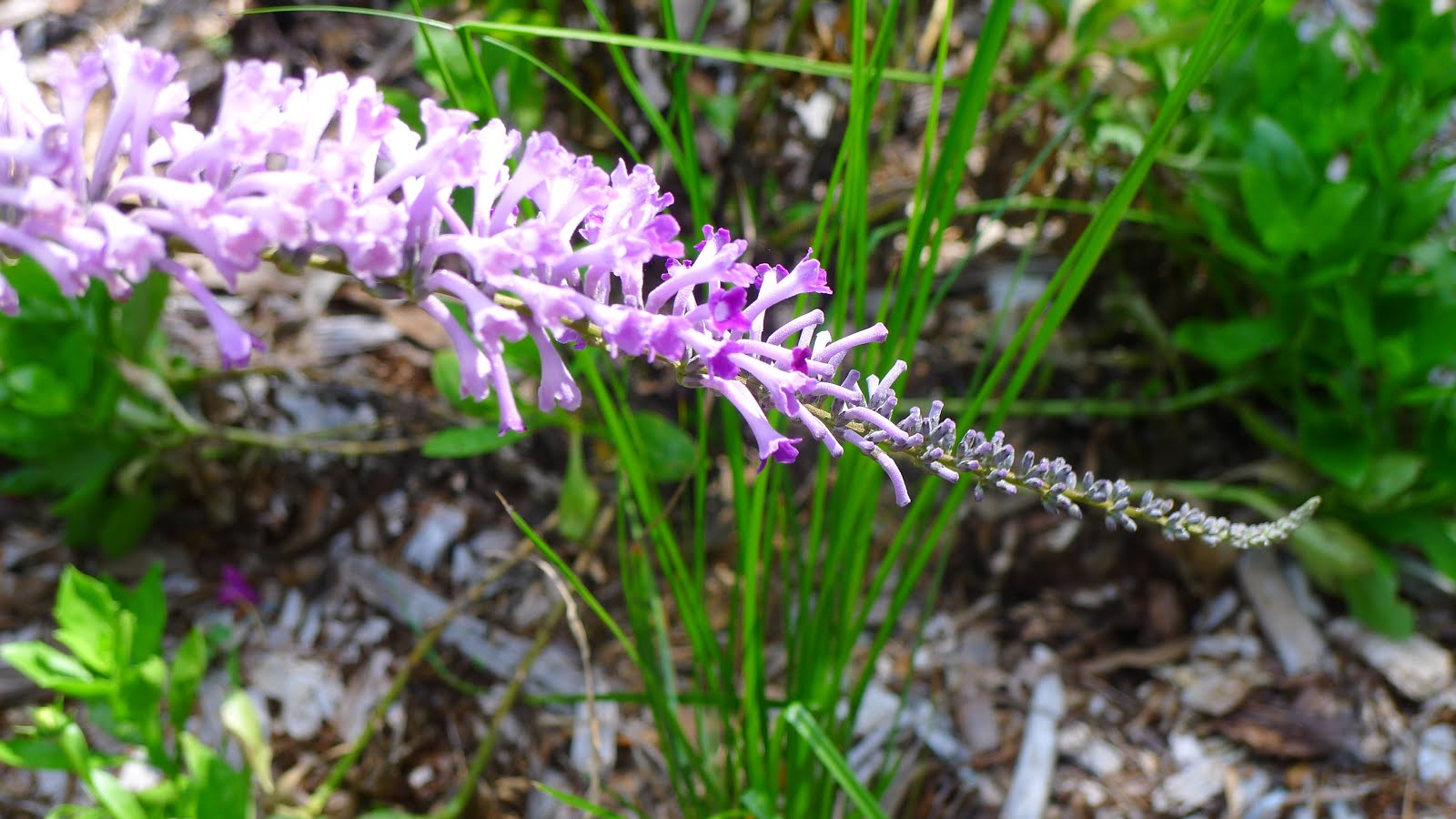
Virtually unknown, spectacular Buddleia lindleyana with shiny green leaves and cinnamon trunks. This incredible plant has up to 60 cm long panicles of medium lavender flowers in summer. Slightly stoloniferous. Do not cut back like otherBuddleias. Medium growth rate. Do not cut to the ground (renewal pruning) as you do with other Buddleias.
I must remember the names of plants, casually learned while helping to plant vulnerable seedlings into the ground. I remember in spring in the woods soft blue stars, “Leberbluemchen” Anemone hepatica, hands full I brought home, cautiously going past the hole where the badger lived. It was March, spring. Now March is autumn…it is not odd anymore. Childhood memories have receded to gilded corners, from where they might make a quick comeback laced with some sadness.
©Photos #mygarden/ Text Ts. Book of Flowers
Monday, 28 March 2016
Subscribe to:
Posts (Atom)
Autumn;
In the southern hemisphere, bees have the opportunity to collect pollen and nectar throughout the year. Camellia japonica. Mayb...
-
Flowers Echeveria Wave; A garden needs a few simple helpers to flourish, sunshine, raindrops, puffs of wind and if we want t...
-
P lanted in my orange corner. I love the brilliant orange of this Bougainvillea teaming well with an orange Ixora, daylily and crucif...
-
This cactus was sown by my daughter Lilli around 35 years ago. Chinocactus grusonii also known as Golden Barrel cactus or mother...